Phytonutrients: the magic in plant food

. . . resist aging and stay young and vital

We’re always hearing that fruits and vegetables are good for us. At this point it probably goes in one ear and out the other.

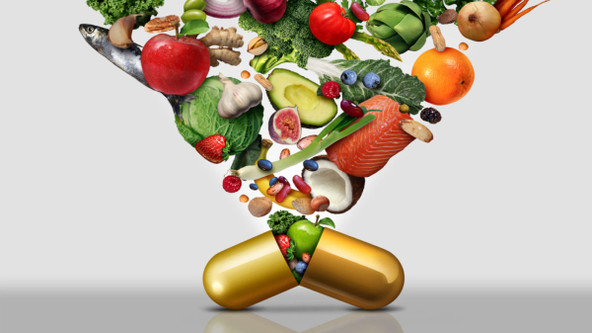
Well, it might be useful to look at why they’re so good for us. A key reason is their phytonutrient content. “Phyto” means plant; phytonutrients are an array of more than 5,000 different nutrients found in plants, apart from vitamins and minerals, that pack a huge nutritional punch. Fortunately you don’t have to ingest all of them to achieve optimal health, but each contributes to health in its own way, and the more of them you get, the better.

Dr. Russell Blaylock, renowned neurosurgeon and leader in using nutrition to prevent and reverse disease, points to human studies that show people who eat lots of fruits and vegetables daily develop improved brain function and are much less likely to suffer brain degeneration as they age. Phytonutrients are especially important as antioxidants, anti-inflammatories and detoxifiers. These are all vital for brain health, but they’re just as important for preventing any of the chronic diseases associated with aging, like heart disease, cancer, Alzheimer’s and many more.

What fruits and vegetables are we talking about? All of them, but especially good sources are berries, citrus and red grapes and red wine (yes a glass of red wine a day can be beneficial!), the leafy greens, the crucifers (broccoli, cauliflower, Brussels sprouts, etc.), tomatoes, garlic and onions, and green and white tea. And don’t forget herbs and spices like thyme, oregano, ginger and turmeric (the source of curcumin).

Blaylock RL. Foods that will heal you. The Blaylock Wellness Report, November 2011;8(11):1-5.  

Cruciferous vegetables are powerhouses of nutrition.  To get more information on these call our office at 1-800-250-3063 for our Cruciferous Vegetable handout.

Share and Enjoy:
  • Print
  • Facebook
  • Twitter
  • email
  • LinkedIn
Posted in February 2012, Newsclips | Tagged , , , , , , , , , , , , , , , , , , , | Leave a comment

Q&A with Raymond: Can You Take Too Many Supplements?

Question: Hi! Can one take too many supplements?  I take quite a large number, but only the minimum dosages — I just take all of them once daily.  The only prescription med I take is one 50 mg Toprol daily.  Again, thanks so much

– JC, Internet

Answer:  Supplements are qualitatively different from drugs in that drugs are far more dangerous.  For example, drugs properly prescribed are the third leading cause of deaths yearly, whereas no one has ever died from taking supplements.  If what you mean by “minimum dosages” is the RDA, you’re probably not getting enough!  The RDA is meant to prevent overt deficiency diseases, but not to prevent chronic diseases like heart disease, cancer, Alzheimer’s, etc.

Check the “Wellness Kits” on our website to see the amounts of specific nutrients we recommend to supplement a good, nutritious diet.  In addition, we recommend at least 3-6 grams of vitamin C daily (more for anyone with a diagnosed disease) and getting tested for your vitamin D levels with a blood test called the 25(OH)D test. Your vitamin D levels should be in the “high-normal” range.  If it isn’t, get a lot more sun and/or supplement with vitamin D3. People with specific disease diagnoses, athletes, and people over age 50 can benefit from additional supplements.

That said, it is certainly possible to get too much of anything.  One woman reportedly died from drinking too much water (she drank huge amounts on a bet).  If you’re going to use megadoses to treat a disease, you should always work with a competent healthcare professional; also if you are on any kind of medication, you should discuss your supplement program with your doctor.  Unfortunately many doctors, although skilled in the use of medications, aren’t knowledgeable about nutritional supplements.  Finding an M.D. who has sought out training in nutrition is best


Share and Enjoy:
  • Print
  • Facebook
  • Twitter
  • email
  • LinkedIn
Posted in Questions & Answers | Tagged , , , | Leave a comment

Protecting Your Brain With Acetyl-L-Carnitine

. . . by Raymond Francis

Acetyl-L-carnitine is an amazing nutrient that is helpful in preventing a wide range of problems. Anyone who is concerned about protecting cells from age-related degeneration, or maintaining and improving brain function or energy levels, should be supplementing with carnitine.

Acetyl-L-carnitine (ALC) is a natural molecule that is found in most cells in the body, especially in the brain, heart, muscles, and nerve tissue. Research shows a steady decline in blood levels of carnitine after age 40. It also shows that supplementing with ALC delays the progression of age-related decline in cognition and energy. This vitamin-like compound is obtained from our diet, mostly from animal protein sources, very little being found in plants. Whenever dietary intake from animal sources is inadequate, the body makes its own, providing that sufficient essential raw materials (lysine, methionine, B vitamins, and vitamin C) are available for its synthesis.

Carnitine participates in a lot of critical biochemistry, including enhancing energy production in every cell in the body. Whenever cellular energy production is impaired, disease is inevitable. Carnitine helps to produce energy by transporting fatty acids into the mitochondria where they are burned. This is a major source of muscle energy; a shortage will result in muscle weakness and fatigue as well as angina (heart pain). Carnitine also helps with weight loss by facilitating the burning of fats.

Carnitine is one of the most extensively studied brain nutrients, and its greatest role may be in protecting and enhancing brain function. It improves mental focus and learning – and energizes and rejuvenates brain cells in the elderly. Acetyl-L-carnitine is the biologically active form of carnitine. It crosses into the brain more effectively than other forms of carnitine, and it enhances energy production in nerve cells. It also promotes the biosynthesis of the key neurotransmitter, acetyl-choline, enhancing cognitive ability, focus, memory, and mood.

Carnitine supplementation facilitates repair to damaged brain cells caused by poor nutrition, stress, toxins, and trauma. It protects against the known negative effects that aging causes in the brain. It is especially useful in protecting injured brains from damage, such as in stroke patients. Stroke patients recover faster and better on 1500 mg of ALC per day. ALC’s positive effects on the brain make it useful to protect against the neurotoxic effects of alcohol, Alzheimer’s, damage from MSG and aspartame, diabetic nerve degeneration, prescription drugs, and recreational drugs. Many people report less confusion and enhanced alertness, less brain fog and more focus, and feeling mentally sharper within hours of taking acetyl-L-carnitine. ALC has even proved useful in enhancing both memory and attention in people with Down’s syndrome.

Acetyl-L-carnitine appears especially useful for Alzheimer’s patients. One study found that people taking 2 grams of carnitine per day exhibited an improved level of responsiveness. In animal studies, carnitine coupled with alpha lipoic acid actually regenerated brain cells and improved performance. Carnitine functions as an antioxidant, protecting the brain and all the cells in the body from free radicals and age-related degeneration. It is safe, well tolerated, and rarely has side effects.

ALC benefits the entire body, including the heart. Studies show it increases energy levels in chronic fatigue patients. It protects against muscle-wasting diseases, including heart muscle weakness. Carnitine reverses the effects of heart aging. In animal experiments, carnitine almost completely restored heart function in older animals, and it has been beneficial in treating congestive heart failure in humans.

ALC prevents cataracts. One of the mechanisms of cataract formation is a process called glycation. Glycation is one of the consequences of consuming the deadly poison known as sugar. Sugar reacts with protein molecules in the body, forming compounds called advanced glycation endproducts (AGEs). When AGEs form in the brain, they cause senility. When they form in the eye, they cause cataracts. Studies show that acetyl-L-carnitine suppresses up to 70% of the most harmful AGEs.

Many people ask me what they can do to keep a healthy brain as they age. I suggest supplementing with ALC. The dosage for healthy people is 1000 to 2000 mg per day. Those with neurological problems would do better with 3000 mg per day. Adding 100 to 300 mg per day of CoQ10 and 250 to 500 mg per day of alpha lipoic acid would be very synergistic. Nutrients that support carnitine metabolism include alpha lipoic acid, B vitamins, CoQ10, magnesium, and vitamins C and E.

The scientific evidence continues to accumulate that ALC may offer unprecedented benefits in maintaining a youthful brain, as well as heart, immune, liver, and peripheral nerve function. As with any nutritional supplement, it is extremely important that the product be very pure and that the molecules be in the correct biological form required by the body. In this case, there should be no solvent residues or D-carnitine present. Doing this correctly requires care and knowledge. Studies show that the overwhelming majority of nutritional supplements do not meet these standards. Beyond Health supplies an acetyl-L-carnitine product that meets my exacting standards for quality and effectiveness.

Raymond Francis is an M.I.T.-trained scientist; a registered nutrition consultant; author of Never Be Sick Again, Never Be Fat Again and Never Fear Cancer Again; Chairman of The Project to End Disease; and an internationally recognized leader in the field of optimal health maintenance.

Reprinted with permission from:

Beyond Health® News

Subscriptions: Call 800-250-3063

website: http://www.beyondhealth.com

email: mail@beyondhealth.com

Copyright 2006, Raymond Francis

Share and Enjoy:
  • Print
  • Facebook
  • Twitter
  • email
  • LinkedIn
Posted in February 2012, Newsclips | Tagged , , , , , , , , , , , , , , , , , , | Leave a comment